Why do I need to adjust the reference A?
Baroque and early music ensembles tune to A=415 Hz. Some modern European orchestras tune to A=442 or 443 Hz for a brighter sound. Check with your ensemble before tuning.
Should I use fine tuners or pegs?
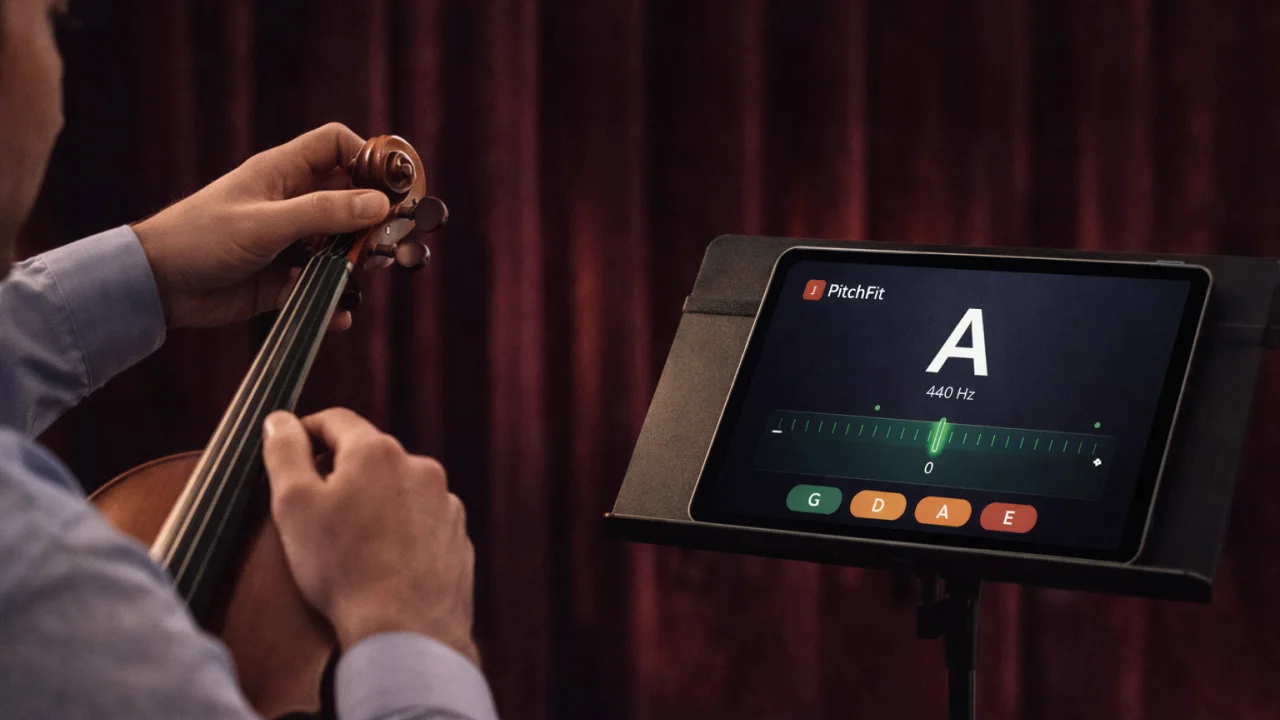
Use fine tuners for small adjustments (within 20 cents). Use pegs for larger adjustments. Turn pegs slowly and support the instrument — a slipping peg can snap a string. Bow the string while tuning so you hear the pitch stabilise.
This works for viola and cello too?
The chromatic detection works for any string instrument. For viola (CGDA) or cello (CGDA), follow the cents reading — the string pills will highlight the nearest violin string, but that does not affect the detection accuracy.