🪕
Ukulele Tuner
by PitchFit
🎙️
Allow microphone access
We need to hear your ukulele to detect the pitch. Audio stays local to your browser.
Microphone access was denied.
Listening…
−50¢−25¢0+25¢+50¢
Reference A
440 Hz
Free online ukulele tuner

Tune your ukulele in seconds

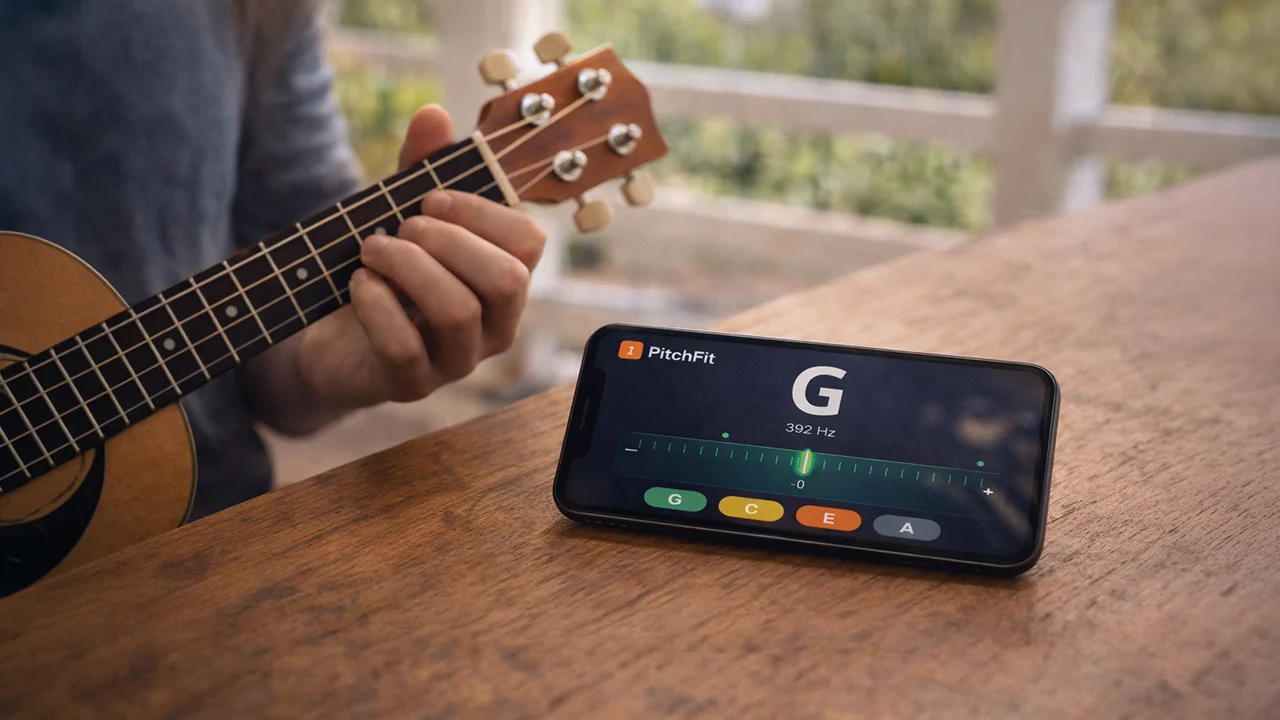
Chromatic ukulele tuner listening through your microphone. Standard GCEA tuning with high reentrant G. Works for soprano, concert, and tenor ukuleles.

How to tune

Standard ukulele tuning: GCEA

The high G makes ukulele sound characteristically bright. This is the standard tuning for soprano, concert, and tenor ukuleles.

4th string (top) — G4 (~392 Hz)

The reentrant high G string. This is the top string but it is higher than the 3rd string — the signature sound of the ukulele.

3rd string — C4 (~261.6 Hz)

Middle C. The lowest note on a standard ukulele.

2nd string — E4 (~329.6 Hz)

A major third above C.

1st string (bottom) — A4 (~440 Hz)

The reference A of the entire musical system.

Common questions

FAQ

What is reentrant tuning?

Reentrant means the strings are not in strict ascending order — the top G string is higher pitched than the next two strings. This gives the ukulele its characteristic jangly sound, different from a guitar.

Does this work for a baritone ukulele?

Baritone ukuleles are tuned DGBE (like the top four guitar strings). The chromatic detection will still work — just ignore the highlighted pills and focus on the cents readout against the DGBE target notes.

Why do new strings go out of tune so quickly?

Nylon ukulele strings stretch significantly for the first few days. Plan to retune multiple times per practice session for the first week. Gently stretching each string by pulling on it after tuning speeds up the break-in.

A tuned uke is a happy uke

Train your ear to hear when it is right.

Take the free pitch test →