Online Metronome — Free Practice Metronome — PitchFit
🎼
Metronome
by PitchFit
90
BPM
Andante
Space Start / stop T Tap tempo
Free practice metronome

The simplest way to practice in time

A precise, web-based metronome for any instrument. Adjustable from 30 to 300 BPM, multiple time signatures and subdivisions, tap tempo, and accent control. Nothing to download.

🎯

Rock-steady timing

Built on the Web Audio clock, the same engine used by professional DAWs. Beats are scheduled in advance so the tempo stays accurate even under browser load.

⌨️

Tap tempo built in

Play along to a recording, tap the spacebar or the Tap button, and the metronome locks to your tempo within four taps. Perfect for transcribing.

🎼

Subdivisions and time signatures

Eighth-note, triplet, and sixteenth-note subdivisions. Time signatures from 2/4 to 6/8. The first beat is accented by default so you never lose the downbeat.

How to use

Three things to know to get going

A metronome is a simple tool, but getting the most out of it takes understanding a few controls. Here is what each one does, and when to use it.

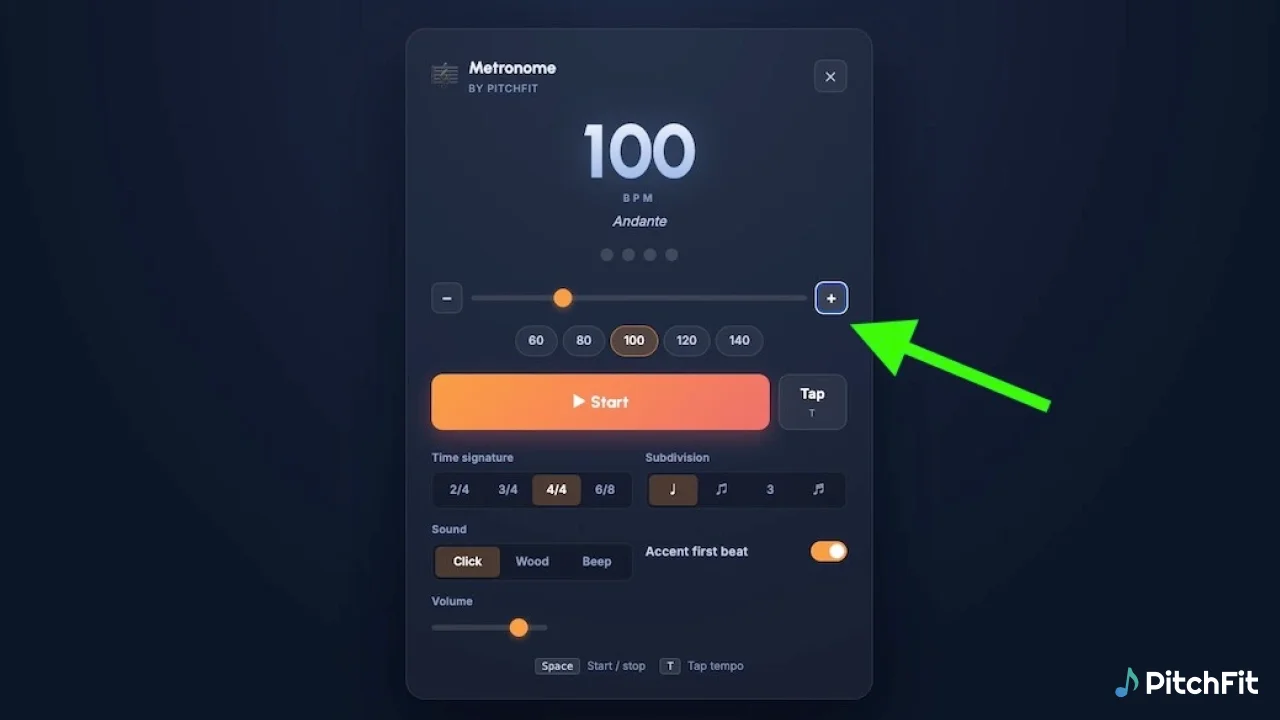
The online metronome interface showing 120 BPM with an accented first beat in 4/4 time

Set the tempo

Drag the slider, use the plus and minus buttons for precision, or tap a preset for common tempos. To match a recording, press T or tap the Tap button in time with the music — the metronome locks to your tempo within four taps.

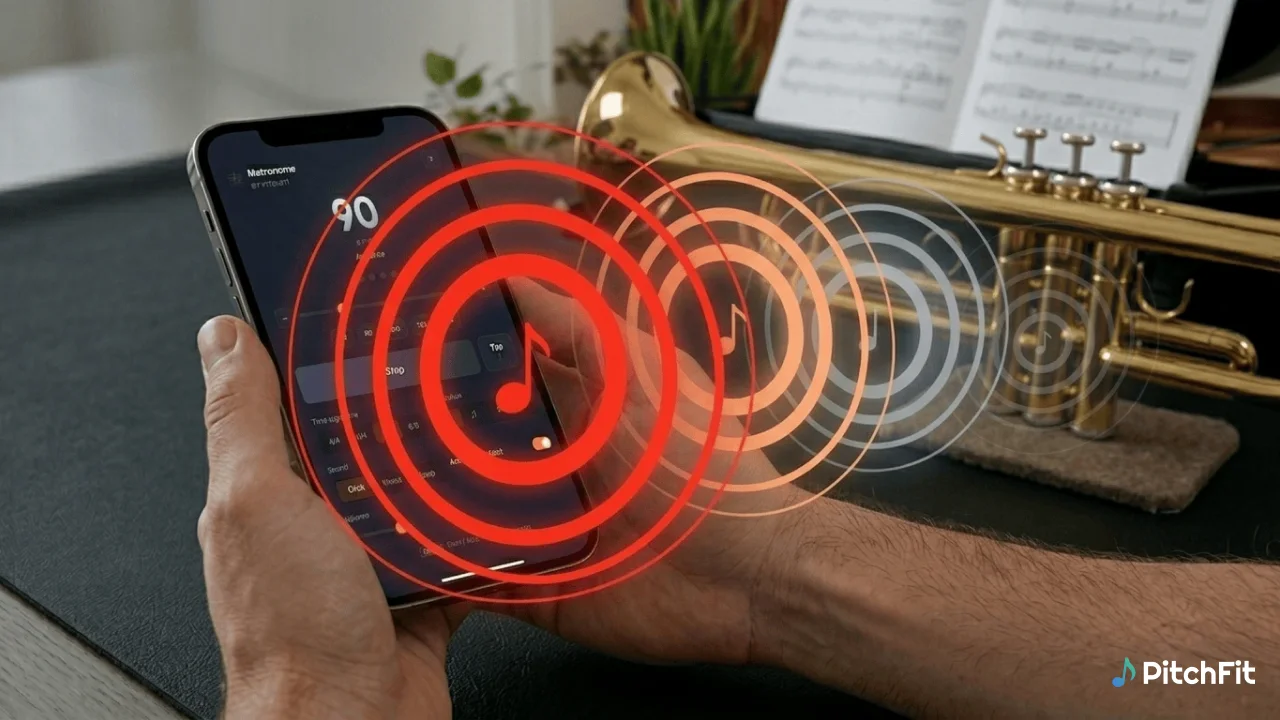
A metronome beat online visualized as sound-wave pulses in 4/4 time signature

Pick a time signature

4/4 suits most popular music. 3/4 is for waltzes. 6/8 gives you a compound-time feel. Add subdivisions — eighth notes, triplets, sixteenths — when you want finer timing during fast passages or complex rhythms.

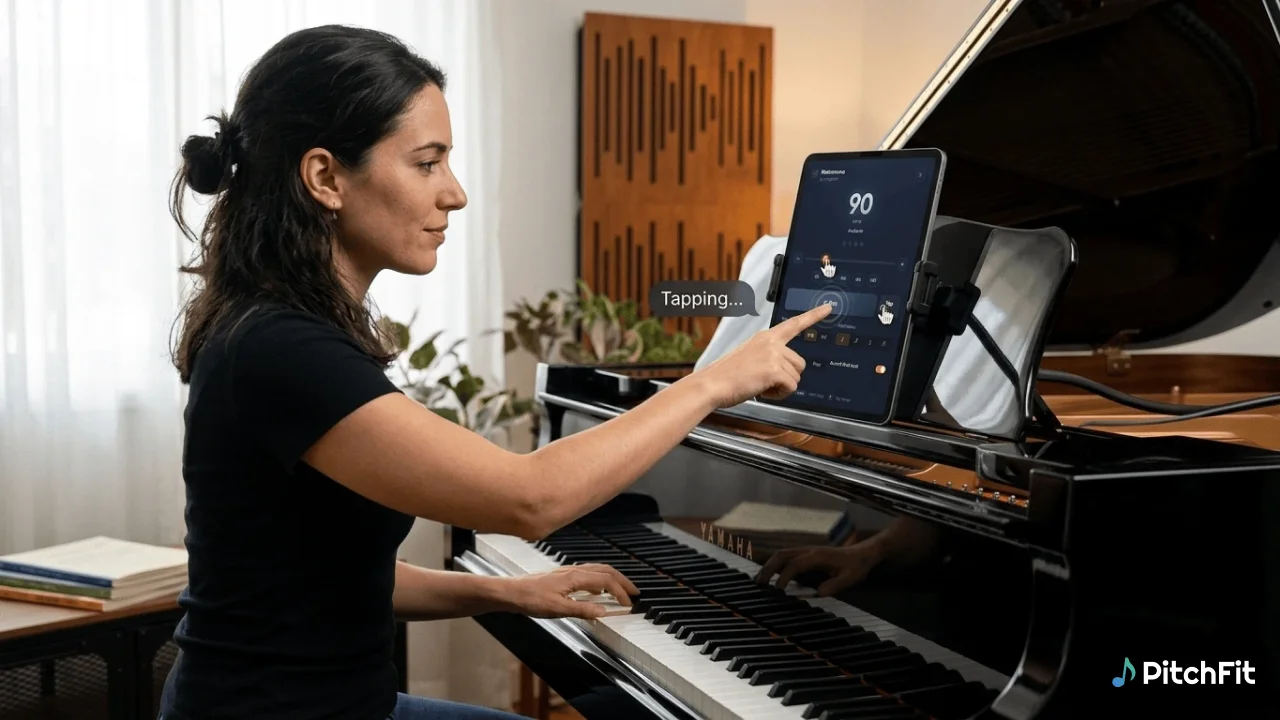
Practicing piano with a metronome online, tapping the screen to set the tempo

Choose a sound

The first beat of each bar is accented by default so you never lose the downbeat. Turn it off for an even click. Pick the sound that cuts through your instrument best: click (neutral), wood (warm), or beep (sharp).

How to practice

Practicing with a metronome actually works

1

Start slower than you think

Whatever tempo feels comfortable, drop it 20 BPM. If you can play a passage cleanly at a slow tempo, speeding it up is just muscle memory. If you practice it fast with mistakes, you are training the mistakes.

2

Move the click around

Advanced trick: set the metronome to click only on beats 2 and 4, or only on the "and" of each beat. This forces you to internalise the pulse instead of leaning on the click.

3

Bump up 5 BPM at a time

When a passage is clean at your current tempo, increase by 5 BPM. If it falls apart, drop back 10 and try again. Small, consistent increments build real tempo range.

Reference

Common tempo markings

Largo — 40–60 BPM

Very slow, solemn. Funeral marches, requiem movements.

Adagio — 66–76 BPM

Slow, expressive. Typical of ballads and romantic movements.

Andante — 76–108 BPM

Walking pace. The reference point most pieces are compared to.

Moderato — 108–120 BPM

Moderate. A common dance tempo.

Allegro — 120–168 BPM

Fast, lively. Most pop, rock, and bright classical works sit here.

Presto — 168–200 BPM

Very fast. Technical études, bebop, technical metal.

FAQ

Common questions

Yes. It uses the Web Audio API clock — the same timing engine used by professional digital audio workstations like Logic Pro and Ableton Live. Beats are scheduled in advance, so the tempo stays precise even when your browser is loaded with other tabs.
BPM stands for beats per minute, the standard way to measure tempo. 60 BPM means one beat per second; 120 BPM means two beats per second. Most popular music sits between 80 and 140 BPM.
Play the recording you want to match, then tap the Tap button or press the T key in time with the music. After four taps, the metronome locks onto your tempo. It is the fastest way to figure out the BPM of a song you are transcribing.
Slower than feels natural. If you can play a passage cleanly at 60 BPM, speeding it up is easy. If you practise it fast with mistakes, you are training the mistakes. Start at around two-thirds of your target tempo, then increase by 5 BPM once you can play it twice through without errors.
4/4 has four quarter-note beats per bar, grouped as 1-2-3-4. 6/8 has six eighth-note pulses per bar, grouped as (1-2-3)-(4-5-6), which creates a rolling compound feel. Most pop and rock are in 4/4; waltzes are in 3/4; jigs and ballads are often in 6/8.
Yes. The metronome runs in any modern mobile browser. Tap tempo works with finger taps on the button, and the keyboard shortcuts (Space to start/stop, T to tap) are replaced by direct touch on mobile.
More tools

Other free tools for musicians

Great timing starts with great ears

The best musicians hear the pulse before they play it.

Take the free pitch test →